Overview
Role
UX Designer
Responsibilities
UX Strategy, Website Audit, Information Architecture, Wireframing, UI Design, Prototyping, Stakeholder Alignment, Developer Handoff
Platform
Responsive Web
Team
Project Manager, CIO, Copywriter, Brand Designer, Developer
15-Second Summary
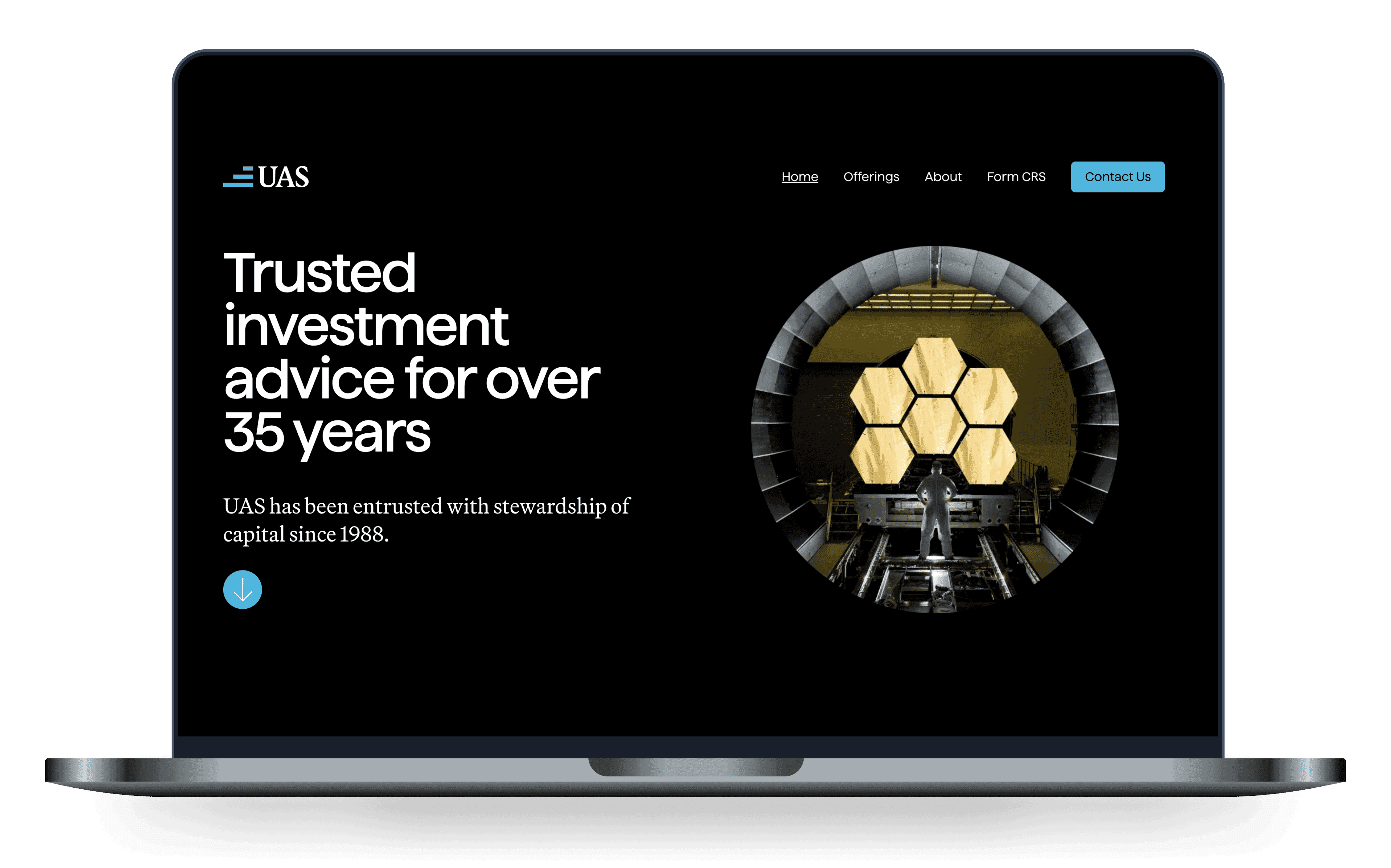
UAS Asset Management is a New York-based investment management firm with decades of client relationships and referral-driven growth, but its outdated website did not reflect the credibility and trust it had built offline. As the UX Designer, I helped redesign the site into a clearer, more polished experience that better explained UAS’s services, made it easier for prospective clients to contact the firm, and created a stronger first impression for referred prospects evaluating whether UAS was the right fit.
The Problem
UAS originally needed a website redesign because its site looked outdated and did not match the quality of the firm’s service.
Through stakeholder conversations, I learned the deeper problem: the website played a critical role in validating trust.
Most new clients came through referrals. After hearing about UAS from a friend, colleague, or existing client, prospective clients would visit the website to confirm whether the firm felt credible and worth contacting.
The existing site made that harder than it should have.
Key Issues
The website felt outdated and did not reflect UAS’s reputation.
Most content was compressed into one page.
The navigation was unclear.
The hero message was too long.
Important trust signals were buried.
Service explanations were difficult to scan.
The Contact CTA was not prominent enough.
Core UX Challenge
How might we redesign UAS’s website so referred prospects can quickly understand who UAS is, what they offer, why they are trustworthy, and how to contact them?
My Role
I led the UX side of the redesign, focusing on strategy, structure, and the user experience.
My work included:
auditing the existing website
identifying content and navigation issues
understanding UAS’s business model and referral-driven client journey
clarifying what prospective clients needed to know and feel
reorganizing the information architecture
creating wireframes and prototypes in Figma
collaborating with the copywriter, brand designer, developer, and UAS leadership
helping align stakeholders around project goals and design decisions
I also helped coordinate communication across the team by documenting decisions, sharing updates, and using prototypes to guide discussions.
Discovery & Strategy
During discovery, I learned that the website’s primary job was not to explain every detail of UAS’s investment strategy.
Its job was to help a referred prospect feel that firm is credible, experienced, thoughtful, and worth contacting.
Instead of treating the site as a generic marketing website, I approached it as a trust-validation experience for people making a high-stakes financial decision.
Experience Principles
I used several principles to guide the redesign:
Lead with trust: Communicate credibility quickly.
Make the complex feel simple: Reduce dense financial language.
Respect the referral journey: Help prospects validate what they had heard.
Make the next step obvious: Make contacting UAS easier to find.
Website Audit & Information Architecture
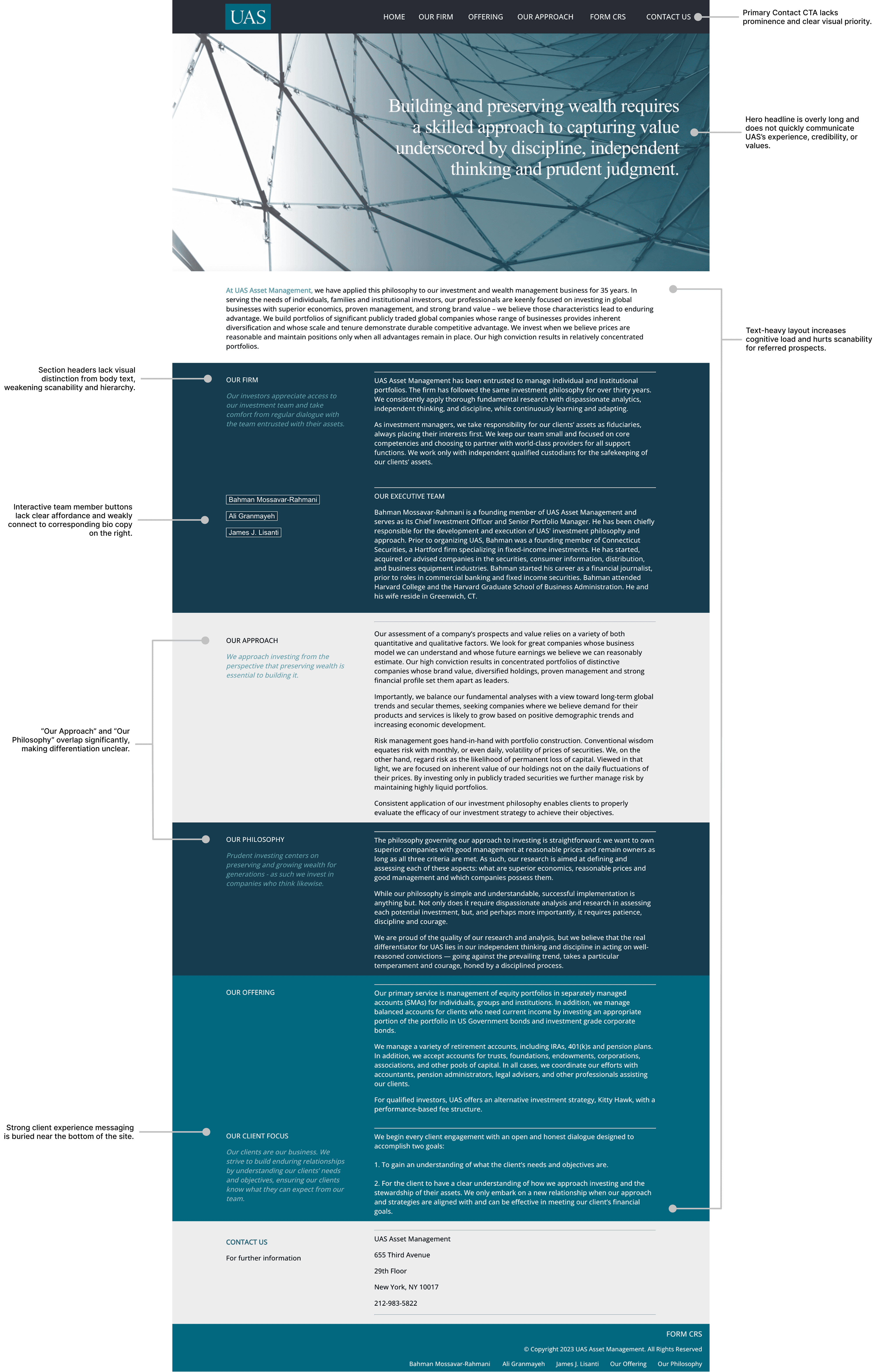
After meeting with stakeholders and gaining a clearer understanding of the website’s role in UAS’s business, I audited the existing site to identify where the experience was breaking down for users.
Although the site contained valuable information, several UX issues made it difficult for prospective clients to quickly build confidence in UAS:
information overload and high cognitive load
poor visual hierarchy
no clear primary CTA
team information was difficult to find
overlapping sections such as “Our Approach” and “Our Philosophy”
a dense one-page structure that was difficult to scan
These insights shaped how I approached the redesign.
Because most visitors were likely referred prospects, not cold traffic, the website did not need to provide an in-depth explanation of every detail of UAS’s investment philosophy. Instead, the experience needed to quickly communicate credibility, clarity, and trust while making users feel comfortable taking the next step to contact the firm.
To support this, I focused on:
reducing cognitive load
creating much clearer visual hierarchy
significantly reducing and simplifying copy
making each section more distinct and purposeful
surfacing only the most important information users needed to build confidence
making the Contact button the clear primary CTA
This led to a more focused, scannable experience that helped users more quickly understand what UAS does, why the firm is credible, and how to take the next step.
Key Design Decisions
Reframed the Homepage Around Trust
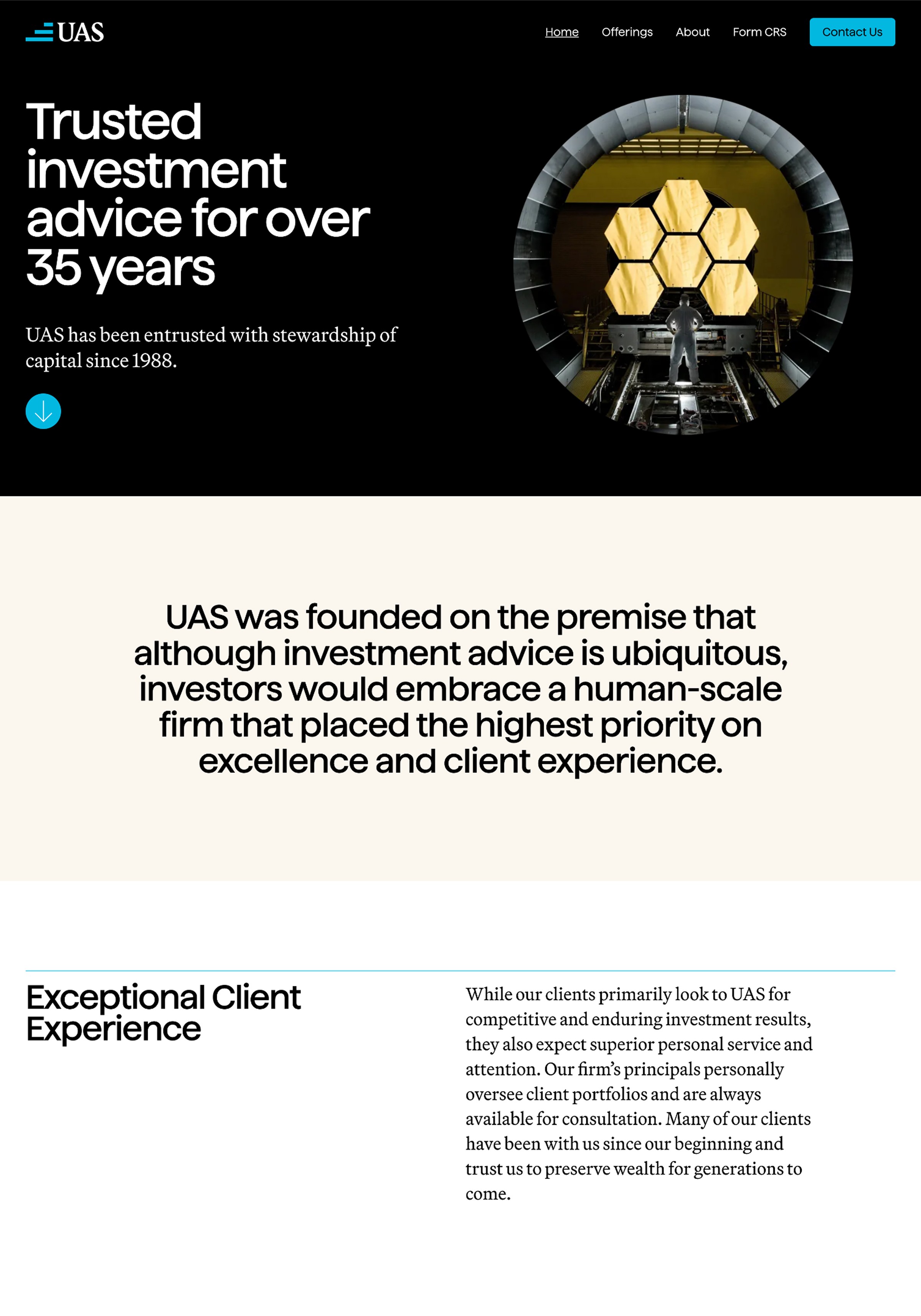
Because many visitors were referred prospects, the homepage needed to quickly validate UAS’s credibility.
I prioritized content that communicated:
UAS’s experience
the exceptional client experience it provides
its investment approach
who the firm serves
what services it provides
how to contact the firm
Why it mattered:
The homepage better supported the real client journey: referral → website validation → contact.
Made the Contact CTA More Prominent
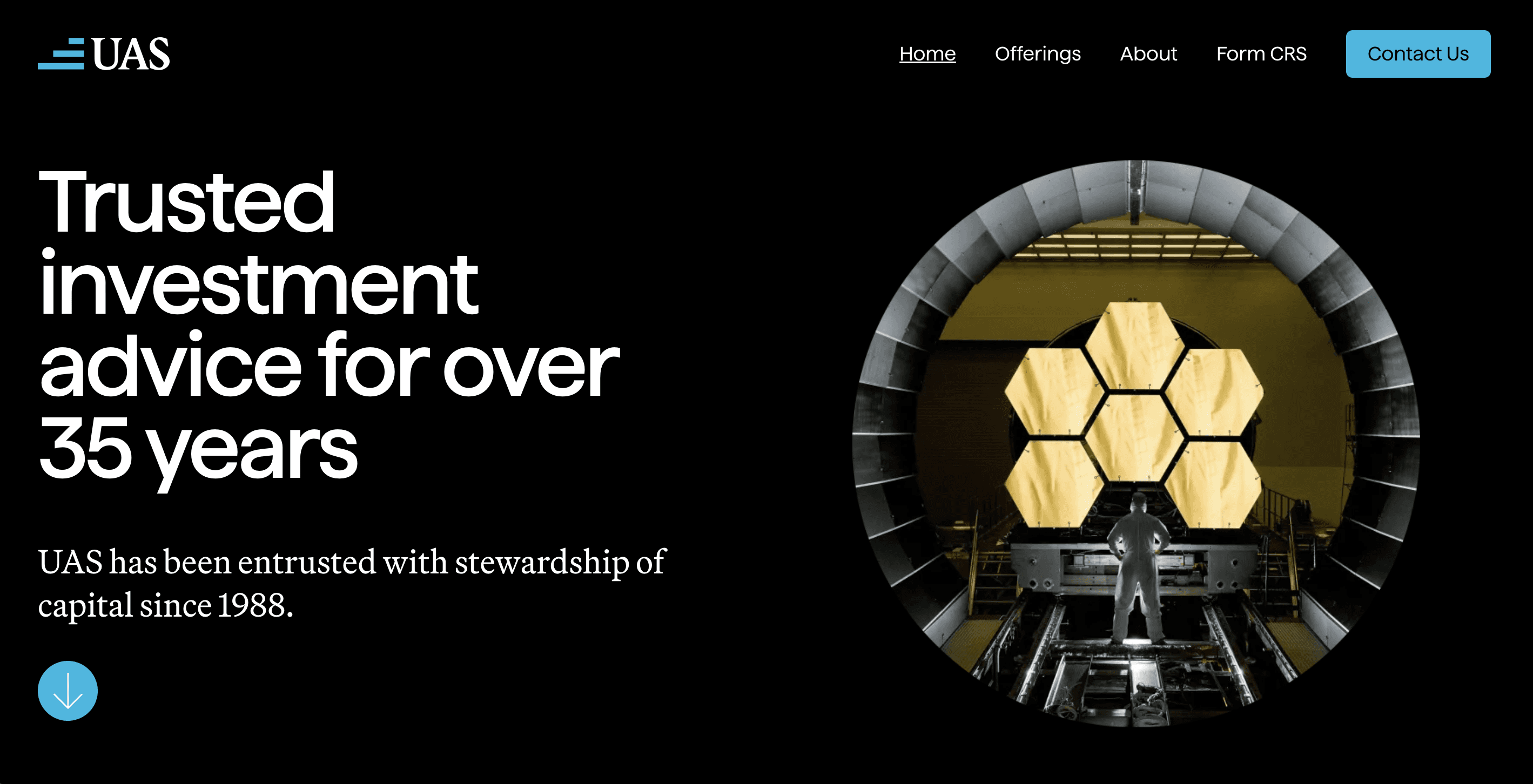
One of the clearest project goals was increasing clicks on the Contact Us link.
I gave the contact path more prominence in the site structure and page hierarchy.
Why it mattered:
For UAS, the website’s goal was not just to inform users. It needed to move qualified prospects toward a conversation.
Simplified Dense Financial Messaging
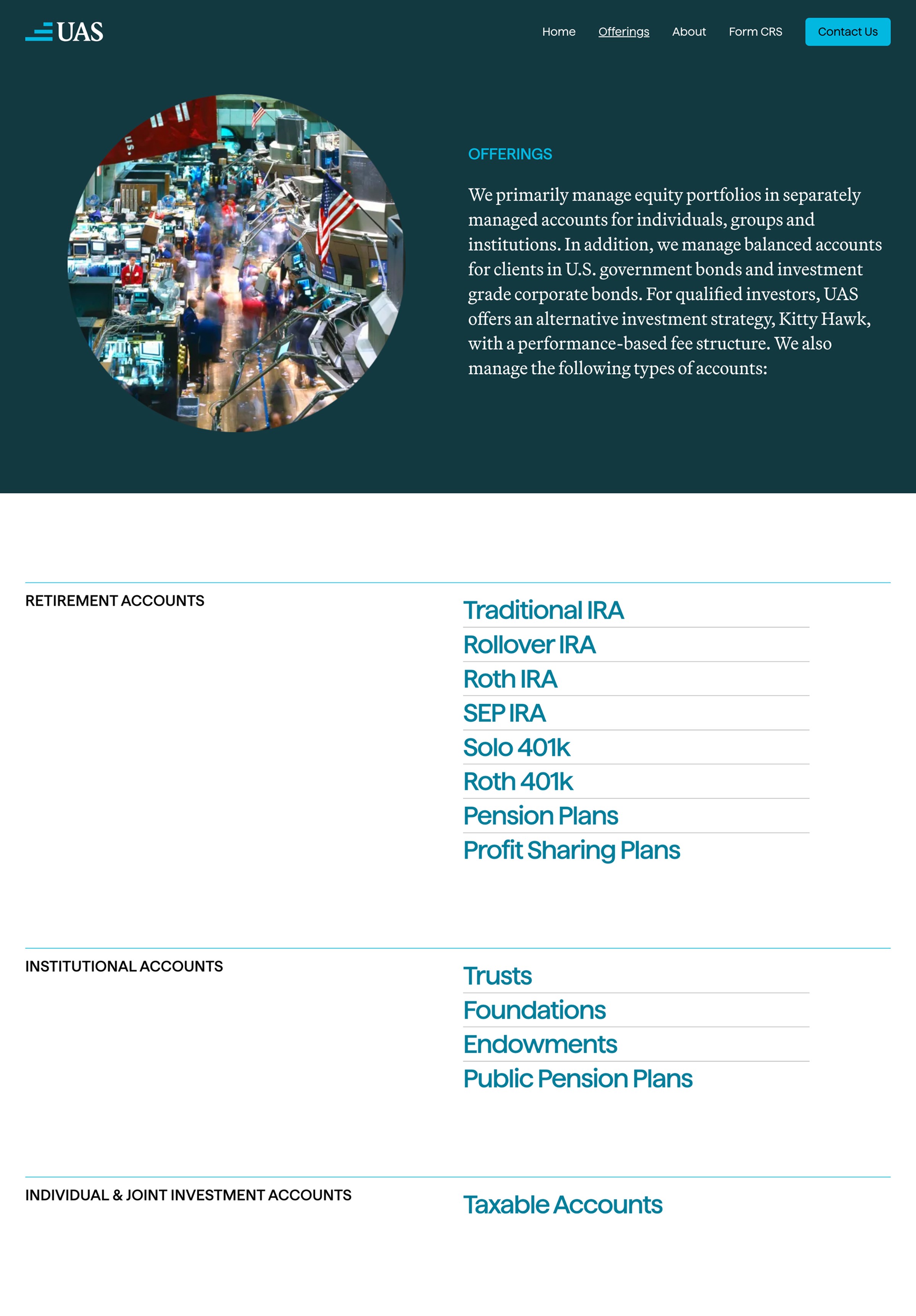
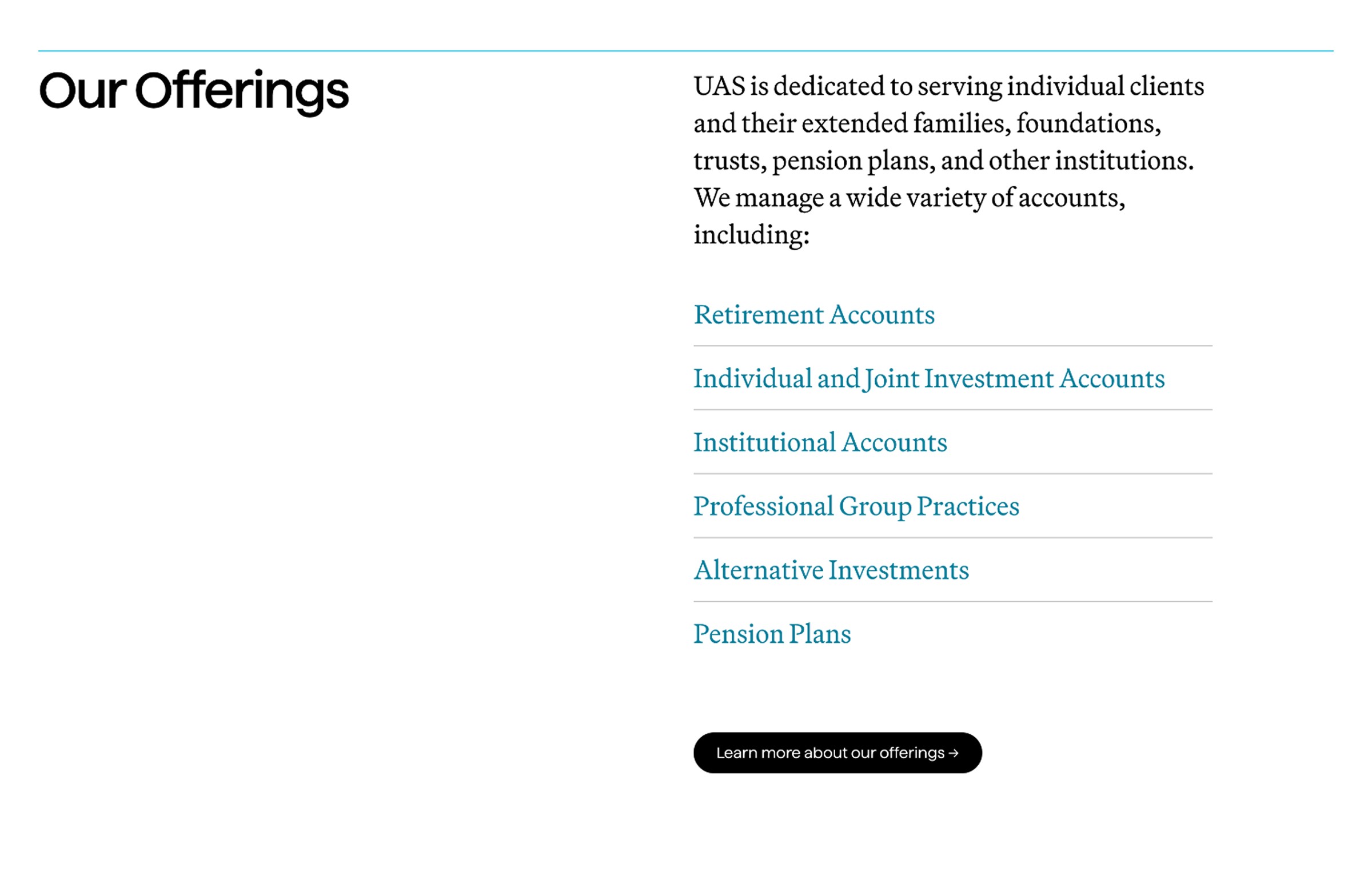
The original site contained important information, but much of it was difficult to scan and visually overwhelming.
Working within the team’s “less is more” content strategy, I simplified the experience by reducing the amount of text on the page, decreasing line width for readability, increasing body text size, reducing the number of sections, and using larger, bolder section headings to create clearer visual hierarchy.
Why it mattered:
Many visitors were likely referred prospects evaluating whether UAS felt trustworthy enough to manage their money. Reducing cognitive load and improving scanability helped users more quickly understand the firm’s credibility, values, and client-focused approach, making them more comfortable taking the next step to contact UAS.
Surfaced Client Focus Earlier
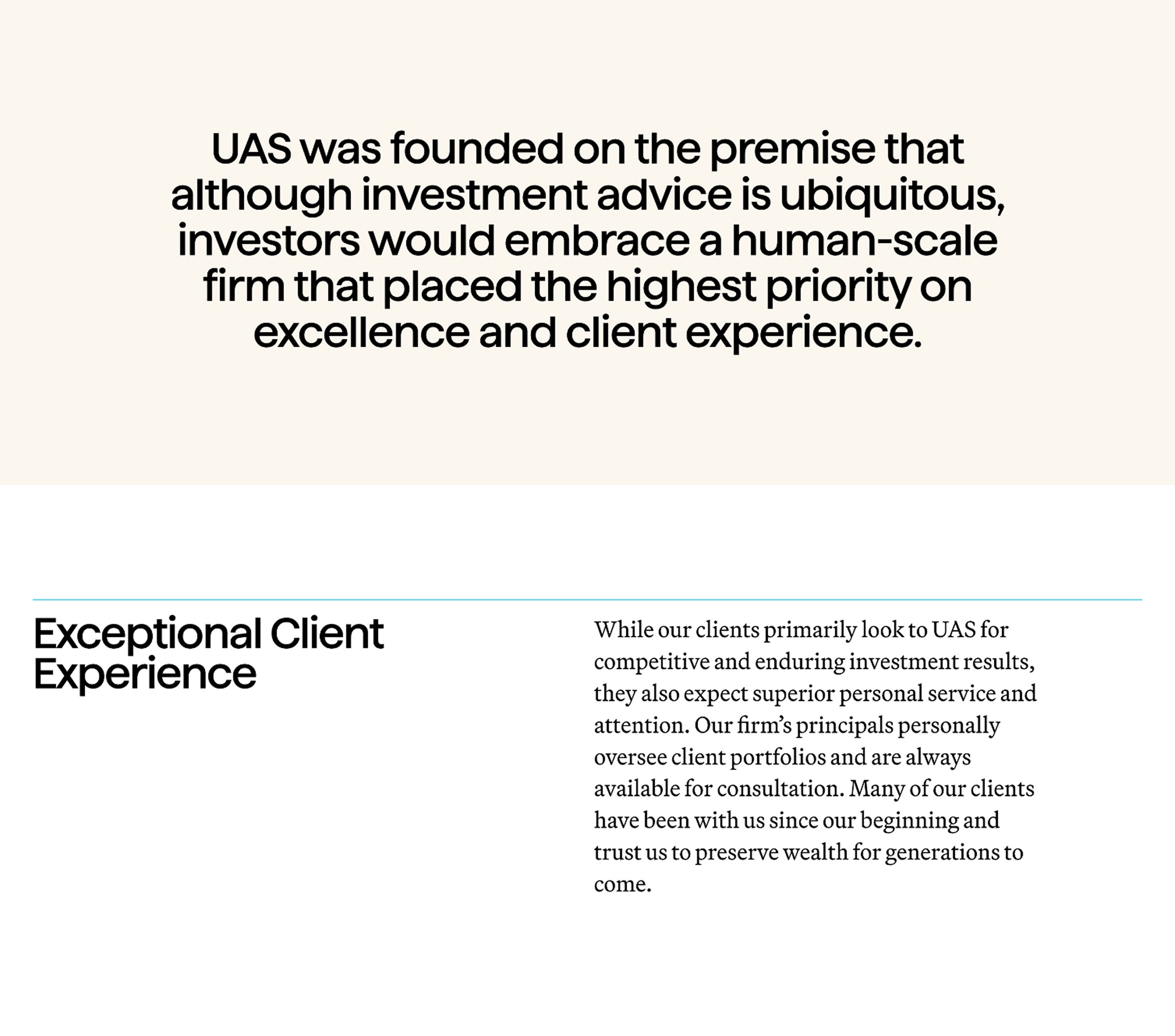
UAS had strong language around client relationships and stewardship, but it was not prominent enough.
I recommended elevating client-focused messaging because it directly addressed what users needed to feel: confidence, reassurance, and trust.
Why it mattered:
In asset management, users are not only evaluating expertise. They are evaluating whether they can trust a firm with a serious financial responsibility.
Aligned the Experience with UAS's Reputation
The visual and structural experience needed to reflect UAS’s quality, stability, and long-term reputation.
I collaborated with the brand designer, copywriter, developer, and stakeholders to ensure the UX, visual direction, messaging, and implementation supported the same goal.
Why it mattered:
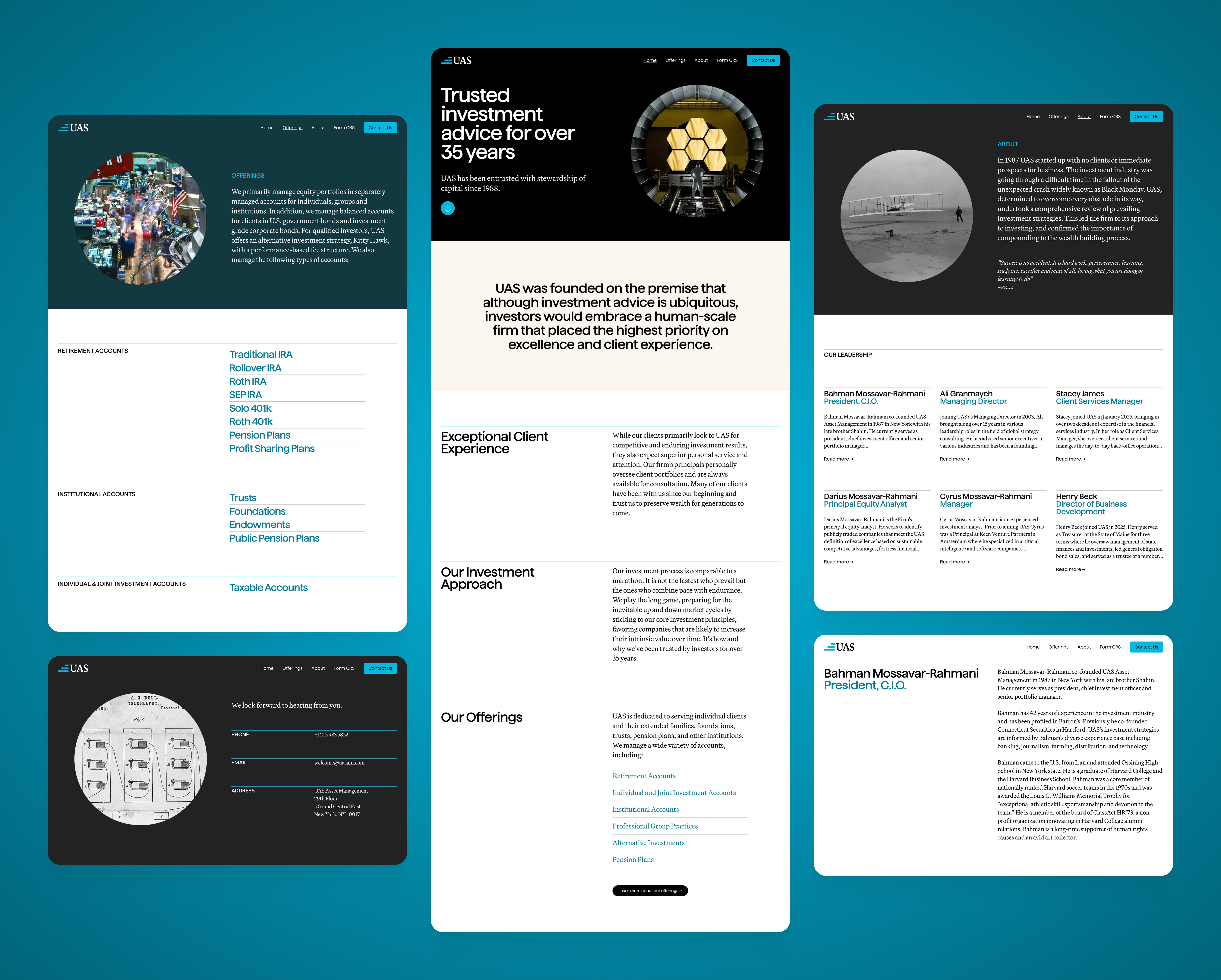
The final website created a stronger connection between UAS’s offline credibility and its online presence.
Outcome & Business Impact
The website launched successfully and received highly positive feedback from UAS leadership.
The redesign helped UAS:
modernize its digital presence
better support referral-driven growth
clarify its services and positioning
make contact easier for prospective clients
create a more credible first impression
align the website with the firm’s 35+ year reputation
The redesigned website gave UAS a digital presence that better matched the trust, credibility, and reputation it had built offline over more than 35 years.
Reflection
This project reinforced the importance of clearly understanding a website’s role in the broader user journey. Once we identified that the website’s primary purpose was to help referred prospects validate trust and credibility, rather than drive cold conversions, it became easier to prioritize content, structure, and messaging decisions throughout the redesign.
I also grew as a cross-functional collaborator here. Coordinating between a copywriter, brand designer, developer, and client PM with different working styles required consistent documentation, proactive communication, and using design artifacts (wireframes, especially) as a shared language across disciplines.
The biggest challenge was translating UAS’s intangible strengths—stability, discipline, client responsibility, and long-term thinking—into a clear digital experience.
If I were to do it again, I'd push for lightweight usability testing earlier. Even a few sessions with high-net-worth individuals or financial advisors would have given us richer signal on what "trust at a glance" actually looks like for that specific audience.
Thanks for reading! ✌️